
Peer-reviewed article backs MATES suicide prevention model
A newly published peer reviewed article has reinforced the evidence behind the MATES in Construction workplace suicide prevention accreditation model, recognising it as a structured, industry-led approach to building a visible “network of safety” on worksites.
Published in NEW SOLUTIONS: A Journal of Environmental and Occupational Health Policy, the article, “Rationale for Accreditation Criteria for the MATES in Construction Workplace Suicide Prevention Program”, outlines how the MATES accreditation model supports suicide prevention through awareness, peer connection and access to skilled crisis support.
The article highlights that MATES was established in Australia in response to elevated suicide rates among construction workers, historically reported as up to double the rate of other working males. It also reinforces the strength of the MATES model as being “by the industry, for the industry”, with the program developed through the support of employers, unions and industry stakeholders.
MATES Australia CEO Jorgen Gullestrup said the article was an important recognition of the practical, industry-led approach that has underpinned MATES since its establishment.
“This article reinforces what the construction industry has known for many years, that suicide prevention on worksites has to be practical, visible and built into the culture of the job,” Mr Gullestrup said. “MATES accreditation is not about putting a plaque on the gate. It is about making sure workers know how to recognise when someone may be struggling, who they can turn to, and how to connect a mate to help before a crisis becomes a tragedy.”
“The strength of MATES has always been that it belongs to the industry. Employers, unions, contractors and workers have come together around a shared belief that suicide prevention is part of workplace safety, and that every worker has a role to play in looking after their mates.”
The article outlines key accreditation criteria for MATES sites, including that all available workers are offered General Awareness Talks (GAT), at least 80 per cent of the workforce remains GAT trained, workers have line of sight to a trained Connector, and the site has access to an ASIST trained person during operational hours.
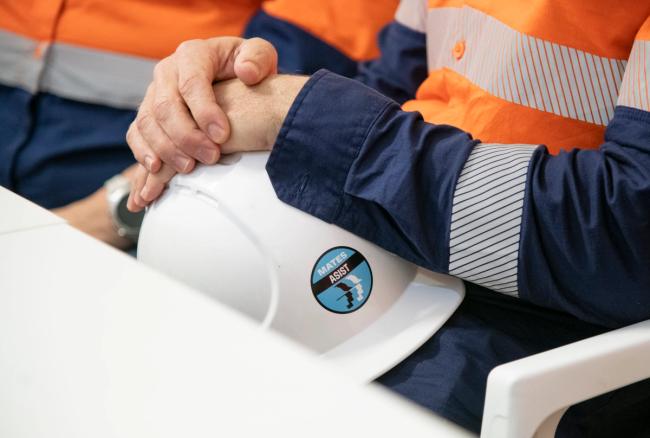
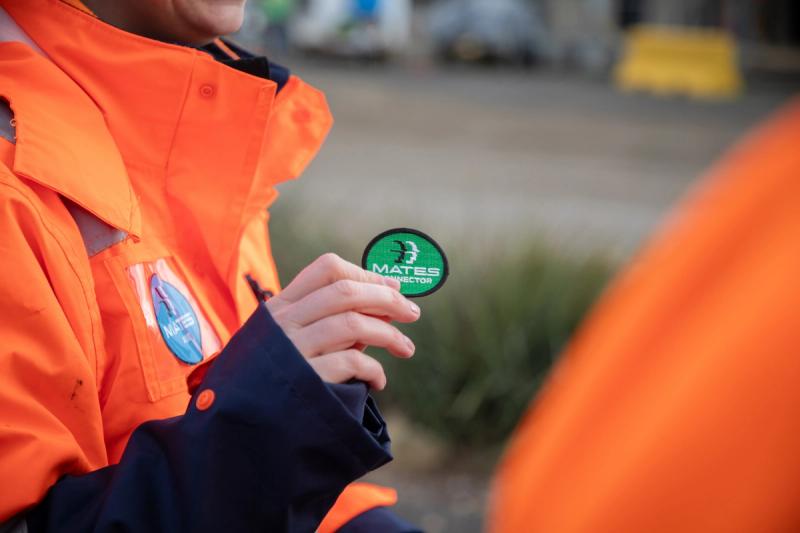
The accreditation standard establishes the requirements for creating a network of safety among workers on a site. Once this network is established, it is reinforced through visible cues such as hard hat stickers, posters and information displayed in lunch sheds, helping keep the program visible and recognisable as part of everyday site culture. MATES has also produced a range of new hi vis work shirts that support this visibility by reinforcing awareness of trained volunteers on site and helping workers identify, through everyday interactions, who they can approach when they or a mate may need support.
Mr Gullestrup said visibility was an important part of embedding suicide prevention into the way sites operate. “A MATES-accredited site should make it clear to workers that there is a network of people around them who know how to notice the signs, start a conversation and connect a mate to help,” Mr Gullestrup said. “The accreditation model gives sites a practical structure for building that network and keeping it visible over time.”
The article also notes that MATES has now reached more than 427,300 workers across Australia and New Zealand, expanded from construction into mining, energy and manufacturing, and accredited more than 414 construction sites across Australia and New Zealand as of 2024.
Mr Gullestrup said the peer-reviewed article demonstrated the importance of treating mental health and suicide prevention with the same seriousness as physical safety. “When workers arrive on a MATES-accredited site, they should see that mental health and suicide prevention are part of how that site operates,” Mr Gullestrup said.
“The goal is simple: build a network where workers are more aware, more connected and more confident to take action when a mate is doing it tough. That is how culture changes, not through one-off training, but through a visible and ongoing commitment across the whole site.”
The article also highlights the continuing evolution of MATES programs, including broader workplace mental health initiatives, psychosocial risk work, critical incident response training and prevention activities aimed at strengthening mentally healthy workplaces.